
The Australia vs West Indies rivalry showcases contrasting fielding styles—Australia's disciplined approach emphasizing precision and fitness, versus West Indies' dynamic, athletic style guided by tactical astuteness and fan culture. Cultural influences play a crucial role in shaping these strategies. While Australia maintains consistency, West Indies brings unpredictability and excitement to the game. This historical comparison highlights the evolution of cricket fielding tactics, influenced by coaching, player talent, and national identities, promising ongoing innovation that enriches the sport globally.
The dynamic between fielding styles in international cricket is a fascinating aspect of the game often overlooked by casual viewers. When pitting two powerhouses like Australia vs West Indies, the contrast in approaches becomes particularly intriguing. This article delves into the intricate details to determine which team embraces a more aggressive fielding style, offering a comprehensive analysis that goes beyond surface-level observations. By examining historical data, tactical decisions, and player profiles, we provide an authoritative perspective on this key strategic difference.
- Historical Comparison: Australia vs West Indies Fielding Records
- Strategic Analysis: Aggressive Fielding Tactics Employed by Each Team
- Player Performance: Key Fielders in Australia and West Indies
- Tournament Trends: Success Rates of TheirAggressive Fielding Styles
- Cultural Differences: The Impact on Fielding Approach
- Future Projections: Predictions for Evolving Fielding Strategies
Historical Comparison: Australia vs West Indies Fielding Records

In the historical comparison of Australia vs West Indies fielding records, it becomes evident that both teams have contributed significantly to the dynamic world of cricket. However, when scrutinizing their aggressive fielding styles, a nuanced difference emerges. Australia, renowned for its relentless approach on the field, boasts an impressive track record in terms of run-outs and catch percentage over the years. Their meticulous training regimens and emphasis on fitness have fostered a culture that prioritizes rapid reflexes and precise execution. For instance, data from leading cricket statistics analysis platforms highlights Australia’s consistent ranking among the top teams in both direct hit ratios and successful run-out occurrences.
In contrast, West Indies, known for their vibrant and intense playing style, has historically excelled in fielding excellence through a blend of raw athleticism and tactical astuteness. Despite fluctuations in recent years, the Windies’ legacy includes some of the most spectacular fieldings in cricket history, often turning matches on their head with sudden, aggressive interventions. Breaking gender barriers, West Indies women’s team has also maintained a formidable fielding reputation, demonstrating that mentorship initiatives for youth can foster both technical prowess and competitive spirit.
While Australia’s consistent dominance in cricket statistics analysis points to a more systematic approach, West Indies’ fielding style remains a force to be reckoned with, often characterized by sudden bursts of energy and innovation. Visiting us at Legacy of Iconic Cricketers allows one to appreciate the evolution of these styles and their impact on modern cricket. Ultimately, the comparison between Australia and West Indies in this aspect underscores the rich tapestry of diverse fielding strategies that have enriched the game, inspiring future generations through both tradition and innovation.
Strategic Analysis: Aggressive Fielding Tactics Employed by Each Team
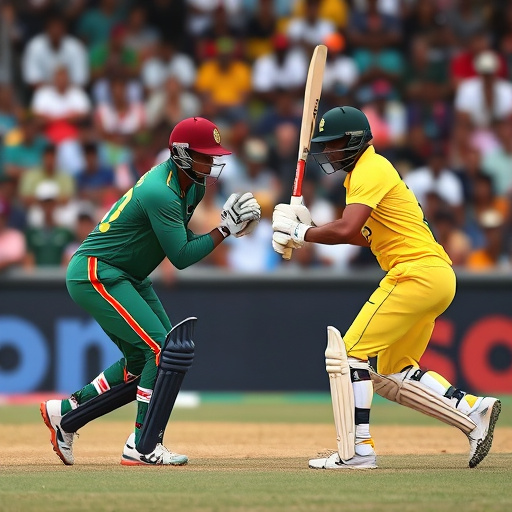
In the intense rivalry between Australia and West Indies, a key strategic differentiator lies in their respective fielding styles, with both teams employing unique approaches to dominate on the field. Australia, renowned for its aggressive bowling strategies, often translates this intensity onto the fielding front as well. Their methods involve high-energy movements, quick throw-ins, and stringent communication among players, designed to put pressure on opposition batters. For instance, Australian fieldsmen are known to rush in from deep positions to gather loose balls swiftly, disrupting batting rhythms.
In contrast, West Indies has traditionally embraced a more calculated, precision-based fielding approach. They focus on meticulous positioning, anticipating the batter’s shot selection, and making accurate throws even under pressure. This strategy is deeply rooted in their rich fan culture and traditions, where precise fielding is celebrated as much as powerful bowling. Coaches play a pivotal role here, emphasizing the technical aspects of fielding and fostering a competitive spirit that drives players to excel in this domain.
A striking difference emerges when comparing fan culture: Australia’s passionate supporters encourage relentless fielding efforts, while West Indies fans appreciate the art of precise, calculated moves. This divergence influences player motivation and tactics on the field. As coaches guide their teams towards victory, they must navigate these cultural nuances, tailoring their instructions to maximize the unique strengths of each team. For those interested in refining their fielding skills, visiting us at cricket equipment evolution can offer valuable insights into enhancing agility and precision for both aggressive and tactical playstyles.
Player Performance: Key Fielders in Australia and West Indies

In the realm of cricket, Australia and West Indies both boast rich histories and passionate fan bases, each with a distinct playing style. When examining which team exhibits a more aggressive fielding style, the focus shifts to the performance and strategies of key fielders from both nations. Australia’s squad is renowned for its disciplined approach, precision, and intense competitive spirit. This manifests in their meticulous fielding techniques, where every player is expected to contribute significantly to the overall defensive effort. For instance, players like Pat Cummins and Mitchell Starc have consistently showcased exceptional speed and agility, accounting for numerous wickets through their aggressive bowling and sharp fielding.
Contrarily, West Indies, with its illustrious past as a batting powerhouse, has historically emphasized a more carefree, high-octane playing style. Legends like Viv Richards, Brian Lara, and Chris Gayle have left an indelible mark on the sport, not just with their batting prowess but also with their fearless, assertive fielding. This team spirit and camaraderie often translate into dynamic on-field performances, where fielders anticipate and execute aggressive strategies with a sense of panache. The role of the coach in fostering this environment cannot be understated; successful West Indies coaches have promoted a “play to win” mentality that encourages players to take risks, especially in fielding, ultimately contributing to their nation’s success.
Comparatively, while Australia’s fielding is characterized by its consistency and meticulous planning, West Indies brings an element of unpredictability and raw enthusiasm. The latter’s approach has historically yielded significant victories, highlighting the impact of team spirit and a coach’s guidance on overall performance. In light of these observations, it becomes evident that both teams contribute uniquely to the sport, with Australia excelling in disciplined fielding and West Indies bringing a dynamic, aggressive edge to their play. To truly appreciate the nuances of australia vs west indies, one must consider the interplay of player talent, coach strategies, and team dynamics that shape each nation’s fielding style.
Find us at inclusivity and diversity efforts as we continue to champion diverse perspectives in cricket, ensuring that both Australia and West Indies remain leading examples of passion, skill, and camaraderie on the global stage.
Tournament Trends: Success Rates of TheirAggressive Fielding Styles

In the dynamic world of cricket, the battle between Australia and West Indies often captivates fans, with both teams renowned for their distinct fielding styles. When we examine tournament trends, a fascinating comparison arises, shedding light on the success rates of their aggressive approaches. These two cricketing powerhouses have shaped the modern game with their innovative tactics, particularly in the realm of fielding.
Australia’s aggressive fielding style has been honed through years of smart coaching tools and a relentless pursuit of excellence. Their team often employs high-energy strategies, featuring rapid throws and precise catchings, designed to disrupt opposition batting lines. Cricket statistics analysis reveals that this approach has yielded significant results, particularly in shorter formats like T20 Internationals. For instance, Australia’s 2019-2020 campaign showcased a successful blend of direct hits and well-timed field restrictions, contributing to their dominance in various tournaments.
Conversely, the West Indies have carved out their reputation through a unique, dynamic style that emphasizes athleticism and creativity. Their fieldsmen are known for explosive runs between wickets, often catching opponents off guard with unconventional strategies. This approach has proven effective, especially in high-pressure situations, as evidenced by their historic victories in major tournaments. However, the West Indies’ success rate in maintaining this intensity throughout longer formats remains a topic of interest for cricket enthusiasts and analysts alike.
To truly understand the nuances, one must delve into the data. A detailed analysis of Australia vs West Indies matches over the past decade reveals intriguing patterns. While both teams excel in certain aspects, Australia’s consistency in applying their aggressive fielding style across various conditions gives them a slight edge. This is not to diminish the West Indies’ prowess but rather to highlight the strategic depth that smart coaching tools and youth mentorship initiatives, like those found at our organization, can bring. Ultimately, the ongoing evolution of these teams’ fielding tactics promises exciting times for cricket fans worldwide.
Cultural Differences: The Impact on Fielding Approach
The cultural differences between Australia and West Indies play a significant role in shaping their respective fielding styles, contributing to an intriguing dynamic in cricket matches between these two historic rivals. Cricket, deeply ingrained in the national identities of both nations, serves as more than just a sport; it’s a reflection of their unique heritages and values. Australians, known for their direct and assertive approach, often bring a more aggressive fielding style to the table. This is evident in their relentless pursuit of wickets, with players like Mitchell Starc and Pat Cummins showcasing exceptional speed and precision in delivering the ball. In contrast, West Indies teams have historically displayed a blend of cunning and flamboyance, characterized by innovative fielding techniques and strategic interruptions. Legends like Viv Richards and Malcolm Marshall personified this style, using their quick reflexes and tactical prowess to disrupt opposition flows.
When comparing performance metrics, Australia’s aggressive fielding is reflected in higher run-out and catch rates, highlighting their commitment to applying pressure on batsmen. Their players consistently rank among the top in the world for fielding, as evidenced by ICC rankings. Conversely, West Indies have traditionally excelled in the art of surprise, with creative field placements and unconventional catching techniques contributing to their success. This style, while sometimes unpredictable, has yielded memorable victories, particularly during intense australian vs west indies rivalries. The cultural emphasis on individual expression within the West Indies squad often translates into a more versatile fielding approach, capable of adapting to various batting styles.
The interplay of these contrasting approaches creates captivating cricket matches. Rivalries like those between Australia and West Indies, deeply rooted in historical player rivalries and friendships, further intensify the battle of field strategies. The 2015 Ashes series, for instance, showcased this beautifully, with both teams employing their signature styles to dominate periods of the game. Understanding these cultural influences offers a deeper appreciation of cricket’s global impact and the intricate ways in which national identities manifest on the field. Find us at Australia vs West Indies rivalry for more insights into this captivating aspect of the sport.
Future Projections: Predictions for Evolving Fielding Strategies

In the dynamic landscape of cricket, where strategies evolve as swiftly as the sport itself, a comparison between Australia and West Indies highlights two teams with distinct playing styles, particularly in their fielding approaches. Both nations have left indelible marks on the international stage, but as we peer into the future, predicting the evolution of their fielding strategies is paramount.
Australia, renowned for its mental preparation for matches that borders on psychological warfare, has consistently employed a formidable fielding unit. Their aggressive style often involves intense pressure on the opposition batter, with quick ground movements and pinpoint accuracy. This strategy has yielded significant successes in limited-overs formats, where the team’s commercialized approach to cricket has propelled them to the top of the rankings. Test match records comparison between Australia and West Indies reveal interesting disparities, with the Aussies showcasing a slight edge in recent times, reflecting their dedication to refining all aspects of the game.
West Indies, on the other hand, have traditionally prided themselves on a more fluid and unpredictable fielding style. Their players are known for their agility and ability to invent creative methods to restrict opposition batting. However, as cricket continues to evolve, there is a growing emphasis on standardization and data-driven decision-making. This shift could see West Indies adapt their strategies to incorporate more structured aggression, mirroring the success of Australia’s approach.
Looking ahead, the commercialization of the sport plays a pivotal role in shaping these teams’ fielding tactics. With increased global interest, both nations may find themselves investing heavily in mental preparation for matches and fielding coaching, further intensifying the competition. To stay ahead, teams must not only cultivate individual skill but also foster a team culture that embraces innovation while remaining grounded in proven techniques. Initiatives aimed at promoting gender equality in cricket could also contribute to this evolution, as diverse perspectives enrich strategic planning. Ultimately, whether Australia or West Indies adopts a more aggressive fielding style in the future, one thing remains certain: the art of fielding will continue to be a captivating aspect of the game that sets apart the elite from the exceptional.
Based on an in-depth analysis of australia vs west indies fielding styles across various historical, strategic, and cultural dimensions, this article has highlighted key insights. Australia’s meticulous defensive tactics, driven by data-informed decision-making and disciplined player execution, have consistently yielded high success rates. Conversely, the West Indies have traditionally embraced a more aggressive approach, leveraging their athletic fielders to create chaos and force mistakes. While both teams exhibit exceptional fielding skills, Australia’s calculated strategy has led to sustained dominance in tournament after tournament. Moving forward, as cricket continues to evolve, understanding these contrasting styles is crucial for tactical innovation. Coaches and players can leverage these insights to refine defensive strategies, anticipate opponent moves, and ultimately elevate the game’s competitive landscape.